So I have a question related to batteries/battery management systems and and breakers/switches/fuses.
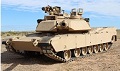
I’ve got a 1/8 scale metal tank, 130+ pounds. In this tank I’ve got a 36v (charges up to 40v give or take) 15.4 Ah Li-Ion (I think) battery that came with the model originally. It appears to have a BMS in it because it has a little lump off to the side of the battery near where the cables come out.
From here the power travels through a 40A fuse (I installed this) and then into a 40A DC breaker (left over from the original electronics that came with the model) that acts as the on/off switch to the dual motor ESC and the turret rotation/elevation ESC.
The dual motor ESC has its own 100A fuse.
Besides the breaker switch and the battery, everything else has been installed by me.
Today when I was driving the model the voltage dropped down to the 37V range due to normal driving/use.
Once it dropped into this range, I found that if I pushed the model kind of hard, the power would cut off all of a sudden. When I examined the tank the power/breaker switch was still in the on position. I found that if I turned the switch off and the back on again, I would get power back as normal. But, then if I pushed the model again by driving fast, the power would cut off again. The more I did this, the less fast I was able to drive the tank before it would die again. I eventually figured out if I kept the speed low, I could drive it back to my house without it dying again.
I’m guessing that because the voltage of the battery is dropping, and the wattage is staying relatively the same, the current/amps are rising and this is causing the model to shut off.
My question is this:
Do you all think the breaker is “tripping” even though the switch is still in the on position and not in between on and off like a traditional house breaker when it trips (at least in America), or do you think the BMS is saying “Danger Will Robinson!” when the amps begin to rise and the BMS cuts the power?
As a follow up, do you think I would be okay to remove the breaker switch and put in a regular switch and rely on the fuse closer to the battery, or look for a higher rated dc breaker?
Any help is appreciated!
Question about battery/breaker issues
Question about battery/breaker issues
- Attachments
-
- IMG_5955.jpeg (2.3 MiB) Viewed 550 times

Re: Question about battery/breaker issues
More than likely it's the BMS. The BMS will limit current draw and cut power off when it starts to drop the cells into a dangerous level. I say dangerous as in if lithium based cells get below a certain voltage per cell, the cells become unusable. If they are drained beyond that level, sometimes a fire hazard can occur with some battery packs. Sealed Lead Acid batteries also experience problems if they are drained too far, but they typically don't have a BMS which limits the current draw. An SLA battery can also have internal battery damage when drained to low. In your case, this may be a case of a battery that might not have enough capacity for the amount of runtime you want.
What are the specs on the battery pack? As in how many amp (or MaH) hours is the battery and what is the BMS rated for in continuous amps?
When it comes to breakers and fuses, I look at the specs of my battery. If the battery is rated for 40C for instance, I use a 40A main breaker. Everything else that I fuse or put a breaker on is using smaller breakers than the main. The main breaker is the total draw of all the systems in the tank from that battery. Putting a 100A breaker on your ESC really does nothing. The main will trip before that breaker ever will and you will never see 100A at the ESC.
For one of my builds I would typically use a 40A main breaker which also acts as my on/off switch and maybe 30A for each ESC. That way if I stall one track it will pop the 30A breaker before any damage to the motor occurs, but still allows the other track to operate. If both tracks stall, it will pop the main and protect the battery. You are using a lot higher voltage system which means your typical amp draw will be lower for your motors than for mine running at 24V. The amp draw lowers as the voltage increases. I measured this using a power meter on servers when I used to do competitive testing for HP and IBM. For instance, a server running at full load on 110V would use say 12A of power. That same server running at 220V would run at full load around 9A. The numbers are hypothetical, but the concept is there.
What are the specs on the battery pack? As in how many amp (or MaH) hours is the battery and what is the BMS rated for in continuous amps?
When it comes to breakers and fuses, I look at the specs of my battery. If the battery is rated for 40C for instance, I use a 40A main breaker. Everything else that I fuse or put a breaker on is using smaller breakers than the main. The main breaker is the total draw of all the systems in the tank from that battery. Putting a 100A breaker on your ESC really does nothing. The main will trip before that breaker ever will and you will never see 100A at the ESC.
For one of my builds I would typically use a 40A main breaker which also acts as my on/off switch and maybe 30A for each ESC. That way if I stall one track it will pop the 30A breaker before any damage to the motor occurs, but still allows the other track to operate. If both tracks stall, it will pop the main and protect the battery. You are using a lot higher voltage system which means your typical amp draw will be lower for your motors than for mine running at 24V. The amp draw lowers as the voltage increases. I measured this using a power meter on servers when I used to do competitive testing for HP and IBM. For instance, a server running at full load on 110V would use say 12A of power. That same server running at 220V would run at full load around 9A. The numbers are hypothetical, but the concept is there.
Derek
Too many project builds to list...
Too many project builds to list...
Re: Question about battery/breaker issues
Man I wish I knew. I tried to bug their customer service about it, but basically all they could tell me was what was printed on the outside of the battery. They said they got it from some supplier and that it was a lead acid 36v 15.4 Ah battery. It doesn’t look like pictures of other LA batteries I have seen pictures of online, so I was skeptical of this.
I’m only guessing that there is a BMS because there is a little lump on the side of the battery that looks like there would be one, customer service was no help in figuring this out for me. But whatever it is, it is underneath the plastic, there is nothing for me to see or interact with.
If there is a good way to figure any of this out please let me know.
The ESC just comes with that fuse built into it.
I’m going to fully charge it tomorrow and then try to find time to take it out again and see how long it lasts. The description of the tank says around 50 minutes with the original hardware. I never ran it until it was dead before I gutted it, so I don’t really have a basis for comparison. I am kind of doubtful I’m going to 50 minutes though.
- Attachments
-
- Circled in red is the lump I’m talking about
- IMG_5955.jpeg (795.49 KiB) Viewed 528 times
Re: Question about battery/breaker issues
Also, check your esc for heat, Some of the ones I use have a thermal cut out feature that behaves very similar to how you describe. In this case I was able to add some heatsinks to the FET's that added a little extra heat capacity. Maybe some small cooling fans could help if you don't have them already?
Re: Question about battery/breaker issues
 Hello, I'm not a battery expert, but it seems to me you have a Li-ion battery pack, and therefore an electronic system called a "BMS" (Battery Management System) designed, as explained above, to protect the batteries. Is it normal for your voltage to be higher when the battery is not under load than when it's running? This is perfectly normal; as soon as you draw a little current (amps), the voltage (volts) drops—standard operation. However, there might be a problem with the BMS or another component, perhaps with the connections? Try opening it by carefully removing the casing, which can be replaced with electrical tape,
(electrical) and if you can see that nasty white paste, and check the connections, also check the voltage of each component with a voltmeter, which should not be less than Minimum voltage 3.6 volts and charge at +/- 5C of the capacity. Also check the connectors, as there is a significant current draw during operation. In some cases, there are also issues with the quality of the cables (copper) which oxidize (under the insulation) and, under high current demands, cannot keep up. This has already been observed on much thinner cables, on servos or RX battery cables.
Re: Question about battery/breaker issues
The "Battery Management System" allows for the control of charging, discharging, and protection of Li-ion batteries.
- IMG_4814.jpeg (129.33 KiB) Viewed 495 times
Re: Question about battery/breaker issues
So I got the battery up to a full charge (40.2V) and drove it around off and on for about 30-45 minutes (I forgot to keep track) up hill and down hill and cross country with no issues. Voltage dropped to 39.4 during this time, so it looks like my issue only arises once the voltage drops below 38V.
This I can deal with, as I was about ready to go back inside when I did anyways.
Unfortunately I did have some other weird electrical anomalies occur (drive ESC was throwing what looked like to be a overheat error randomly, towards the end the sound went out for everything but the engine and acceleration, headlights stopped working), so I’m not out of the woods yet. However, it’s nice to have this issue solved, for the most part. I’m hoping something came loose inside, but we will see.
One last question, I’m used to LiPo needing to be kept at a storage charge, do Li-ion need the same?
Thanks for everyone’s help!
This I can deal with, as I was about ready to go back inside when I did anyways.
Unfortunately I did have some other weird electrical anomalies occur (drive ESC was throwing what looked like to be a overheat error randomly, towards the end the sound went out for everything but the engine and acceleration, headlights stopped working), so I’m not out of the woods yet. However, it’s nice to have this issue solved, for the most part. I’m hoping something came loose inside, but we will see.
One last question, I’m used to LiPo needing to be kept at a storage charge, do Li-ion need the same?
Thanks for everyone’s help!
Re: Question about battery/breaker issues
Okay, if the voltage doesn't drop any further? Personally, I'm leaning more towards an electronics issue (ECS or something else) than a battery problem. Because even at the lowest voltage where the problem occurs, it should still work, right? Check all your electronics, see if anything is overheating, or if there are any loose connections on the cables.
Re: Question about battery/breaker issues
The smart charger I have charges my LiPos to 3.84 per cell for a storage charge. Is 3.75 exclusive to Li-ion, or what you charge you LiPo and Li-ion to when storing?
I’m guessing since I can only charge to 40v now I have damaged the battery somewhat (assuming it’s a 10s)?