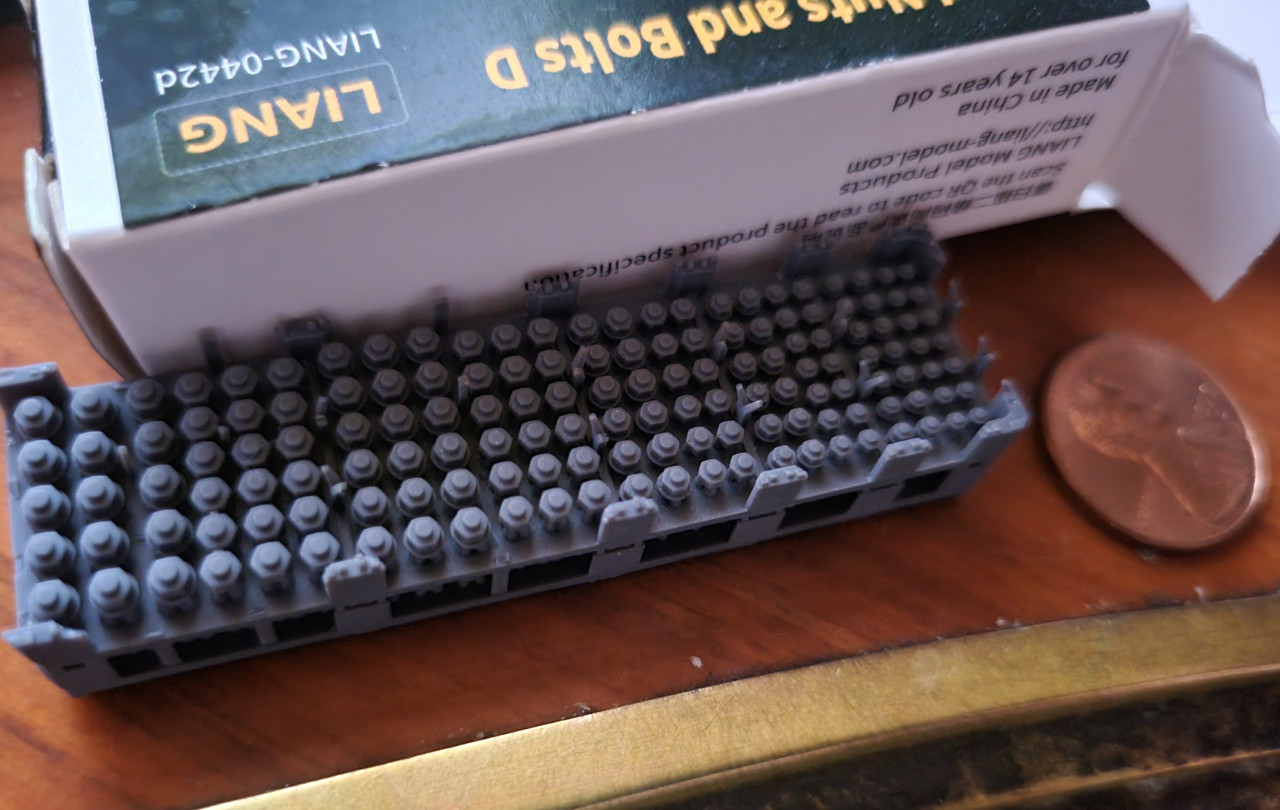
Rivets...I found a new (to me) way to fill unwanted holes in the hull of my M-113 A.P.C.
Posted: Mon Dec 29, 2025 2:21 am
When I started adding stuff to my TongDe M113 it was fitted as one used in the Vietnam war. And one thing I noticed from looking at images of the real thing, were their sides. The sides of the M-113's in Vietnam, were left bare - none of the crew's personal effects, no helmets, no rucksacks, nothing was hung off the sides. No doubt due to passage through dense vegetation, which would have simply ripped off anything the crews hung off the sides.
So I made my M-113 with bare sides as well. But this left several ugly small holes on the hull where the accessories were supposed to go.
First I filled the holes with putty. But the putty shrank upon drying, which left a small dent instead. So I had just resigned myself to the holes until I saw this image of an M-113 with crew in Vietnam, that gave me a very simple idea.
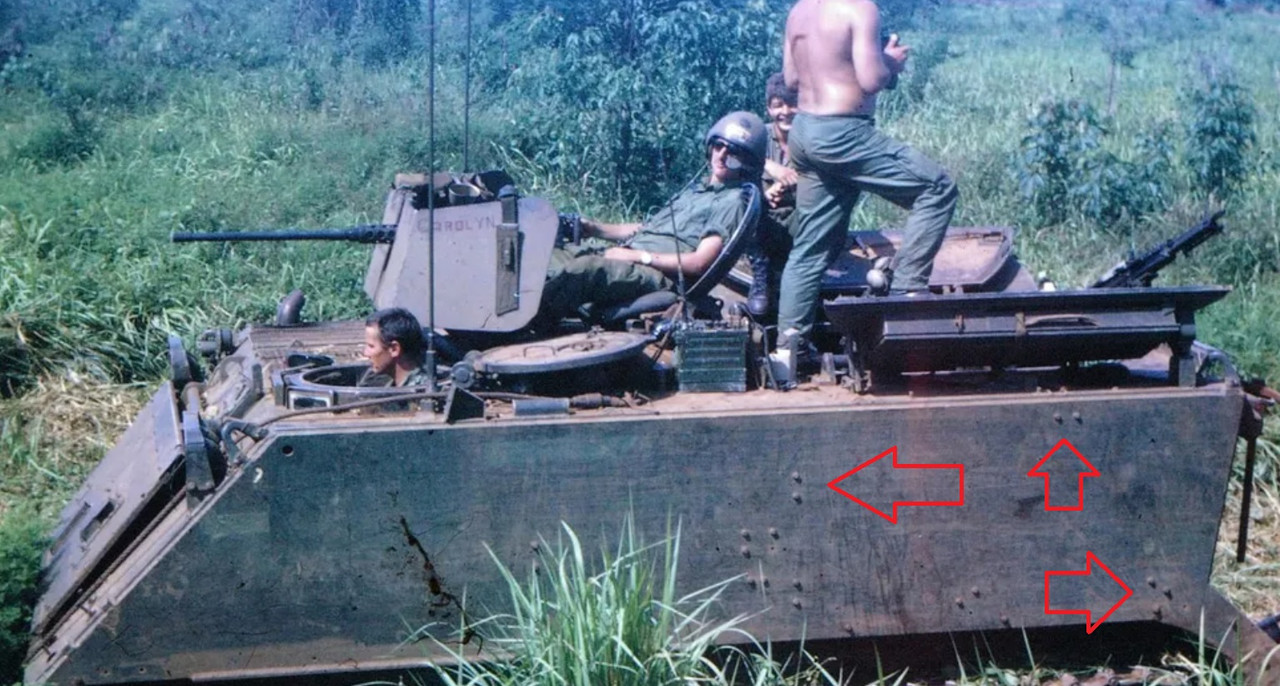
So it turns out the M-113, like almost every armored vehicle, is chock-full of rivets! Rivets here, rivets there, anywhere welding on the tank isn't an option voila RIVETS. In the case of my M-113 I had several ugly holes left behind even after adding on all the fittings. So I decided to fill the small holes with rivets.
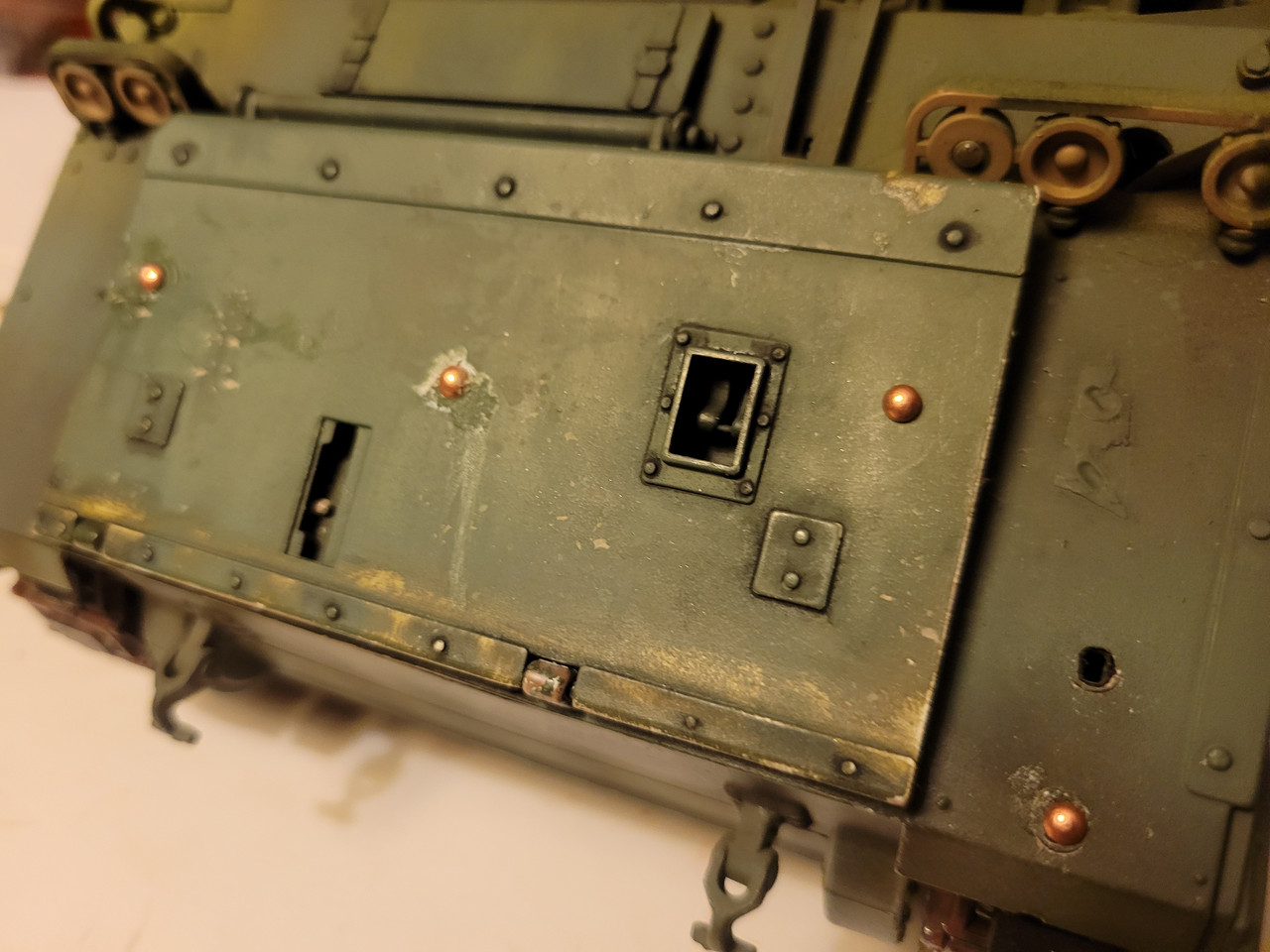
Turned out the small ones fitted most of the holes.
(One could argue that, compared to the molded-in rivets on top of the water shield plate - at least I think that's what the part is - the rivets I added on are comparatively huge, because they are. But I think I'd need to use something really tiny, like a pin-head, to make scale rivets. But the tiny rivets I used were hard enough for me to work with, even using tweezers, and I wound up just dropping the rivets on the ground more often than not! So I think these are the smallest rivet heads I want to use.)
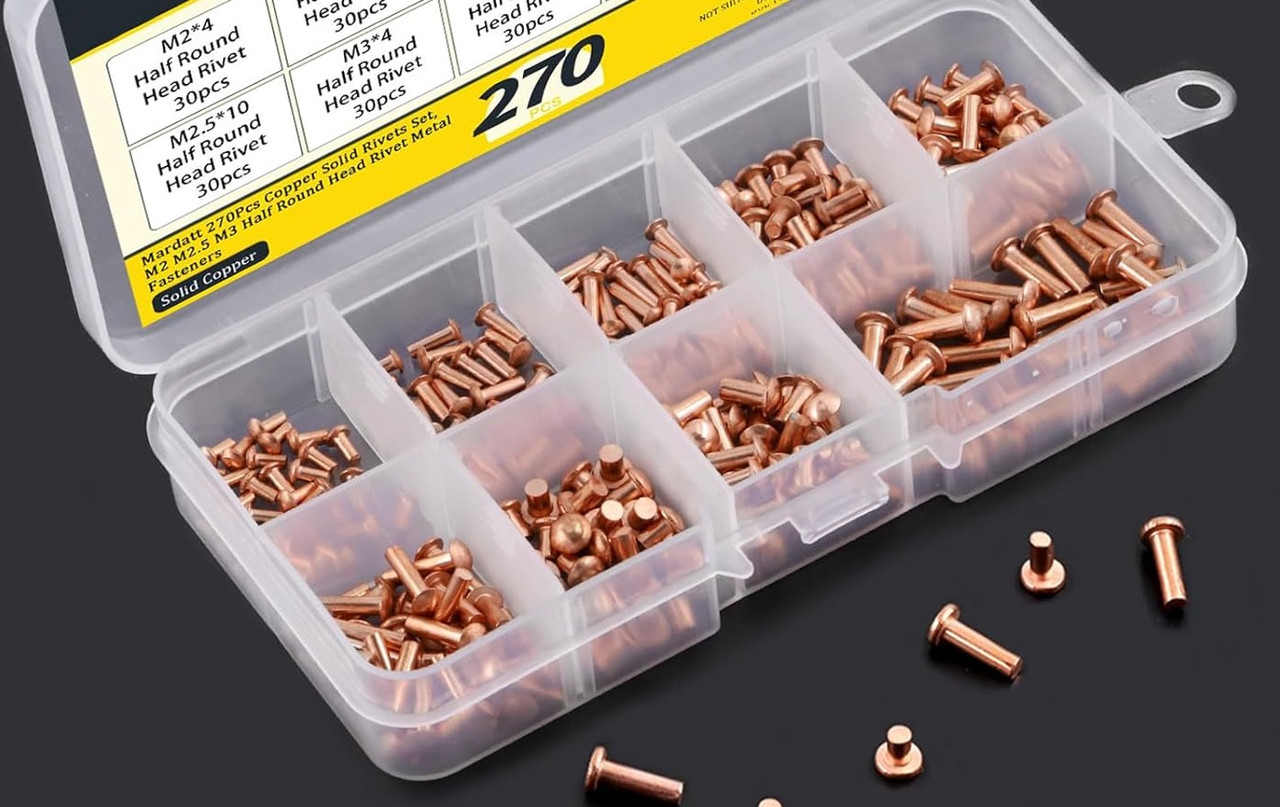
Of course they sell rivets made of almost every metal you can name, plus plastic ones too. But I chose copper rivets as they're easier to cut down if I need to.
Even the smallest rivets were slightly too large for some of the holes, so I reamed out the hole by spinning the tip of an X-acto knife. Then I super-glued them on.
I left these unpainted to take the image to be touched up later.
Anyway, I bought a life-time supply of copper tank rivets, from South American River for $12
So I made my M-113 with bare sides as well. But this left several ugly small holes on the hull where the accessories were supposed to go.
First I filled the holes with putty. But the putty shrank upon drying, which left a small dent instead. So I had just resigned myself to the holes until I saw this image of an M-113 with crew in Vietnam, that gave me a very simple idea.
So it turns out the M-113, like almost every armored vehicle, is chock-full of rivets! Rivets here, rivets there, anywhere welding on the tank isn't an option voila RIVETS. In the case of my M-113 I had several ugly holes left behind even after adding on all the fittings. So I decided to fill the small holes with rivets.
Turned out the small ones fitted most of the holes.
(One could argue that, compared to the molded-in rivets on top of the water shield plate - at least I think that's what the part is - the rivets I added on are comparatively huge, because they are. But I think I'd need to use something really tiny, like a pin-head, to make scale rivets. But the tiny rivets I used were hard enough for me to work with, even using tweezers, and I wound up just dropping the rivets on the ground more often than not! So I think these are the smallest rivet heads I want to use.)
Of course they sell rivets made of almost every metal you can name, plus plastic ones too. But I chose copper rivets as they're easier to cut down if I need to.
Even the smallest rivets were slightly too large for some of the holes, so I reamed out the hole by spinning the tip of an X-acto knife. Then I super-glued them on.
I left these unpainted to take the image to be touched up later.
Anyway, I bought a life-time supply of copper tank rivets, from South American River for $12