Page 2 of 2
Re: 1/6 Stuart
Posted: Thu Dec 25, 2025 6:59 pm
by RCBobM
Merry Christmas 2025 RCTW

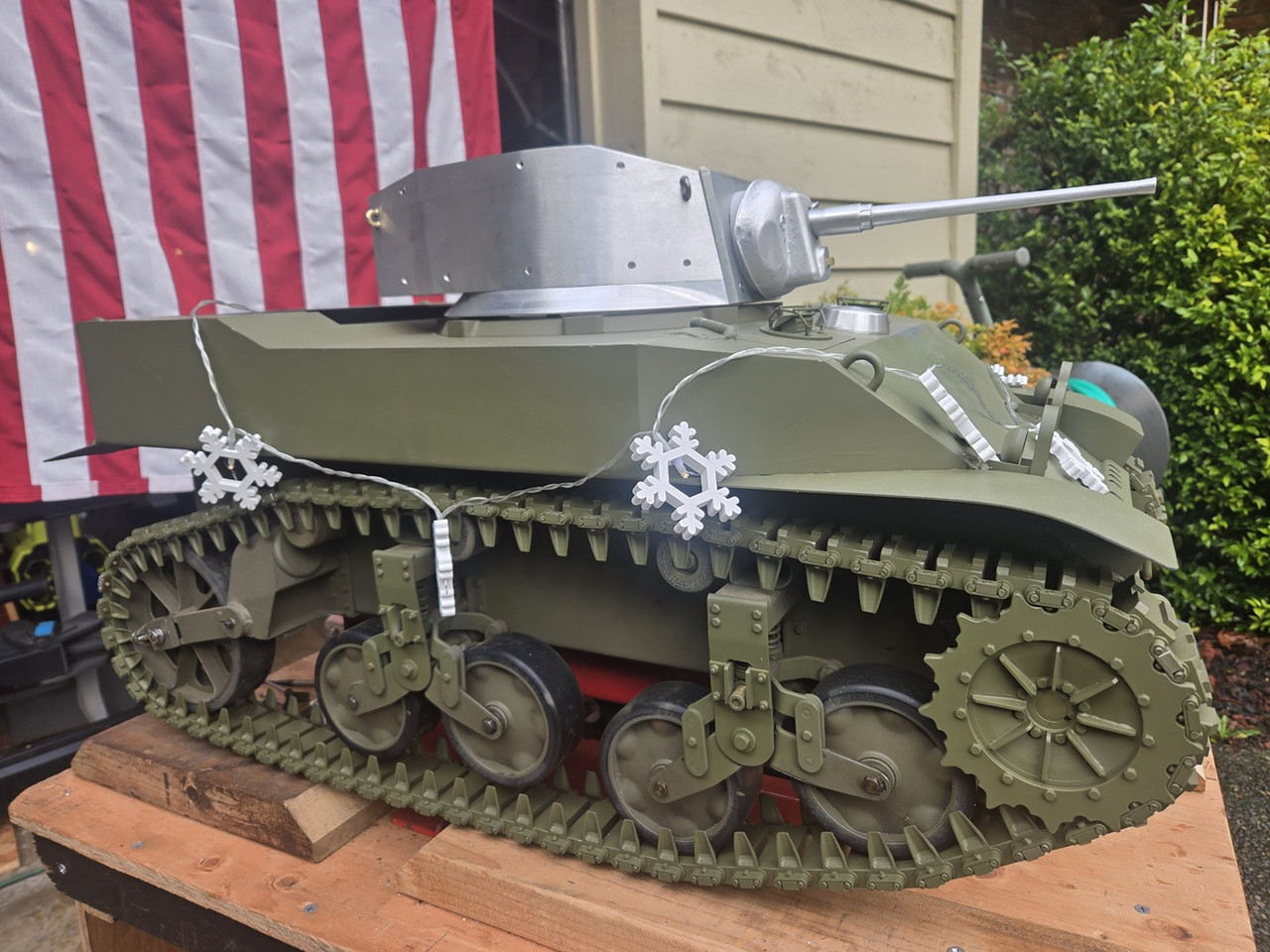
Re: 1/6 Stuart
Posted: Thu Dec 25, 2025 8:19 pm
by Barthez
Excellent work, I like use of the lazy Susan. We have a lazy Susan with a bearing is similar to the one you are using. It is over engineered for the use it’s put to.
Re: 1/6 Stuart
Posted: Thu Dec 25, 2025 8:41 pm
by tankme
Merry Christmas, Bob. Those tracks look awfully green on my monitor. Maybe I need to adjust the color on it...

Re: 1/6 Stuart
Posted: Thu Dec 25, 2025 8:55 pm
by Stormbringer
Love its crew tho

Re: 1/6 Stuart
Posted: Fri Dec 26, 2025 9:25 pm
by Herr Dr. Professor
I do find all the steps of your creating this Stuart remarkable, for I cannot accomplish in plastic half of what you manage in metal. And the crew is "seasonally appropriate."

Re: 1/6 Stuart
Posted: Sun Dec 28, 2025 11:38 am
by Meter rat
Marvellous work. How does one print metal?
Re: 1/6 Stuart
Posted: Sun Dec 28, 2025 8:59 pm
by tankme
Meter rat wrote: ↑Sun Dec 28, 2025 11:38 am
Marvellous work. How does one print metal?
They have special industrial printers that do it. Usually there is a post processing bake that happens after the part is "printed". They use a powdered kind of material. The front end brace on my Tamiya KV-2 is 3D printed in brass.
Re: 1/6 Stuart
Posted: Sun Dec 28, 2025 9:16 pm
by Tiger6
As far as I am aware, there are 2 methods of direct printing, both use powder metalurgy.
In both methods the metal powder is spread out in thin layers over a print bed. Method 1 uses a laser to partially fuse the powder (think of your normal office laser printer), method 2 (currently proprietry to HP) uses inkjet printer technology to dispense a binding agent over the deposited layer. Both methods require a trip thru some form of heating apparatus to fully fuse the powder - this part of the process is no different from normal powder metalurgy production methods that produce parts like engine valve seats, or timing drive belt pulleys.
You can also get 3D printed cores for a normal casting process. Either laser print the sand cores directly (a popular method for producing rapid prototype parts in my line of work), or 3D print the desired part with runners and risers like you would with a 'old fashioned' lost wax pattern in a cheap plastic like PLA, pack it in sand and then pour in the metal, burning off the pattern material in the process.